Key takeaways
- Cashback has a fixed value, points don't. Points are worth whatever your redemption gives.
- For most people spending under ₹50,000 a month, a good cashback card pays more for less effort.
- Points win when you redeem for travel at a high value and spend enough to earn plenty.
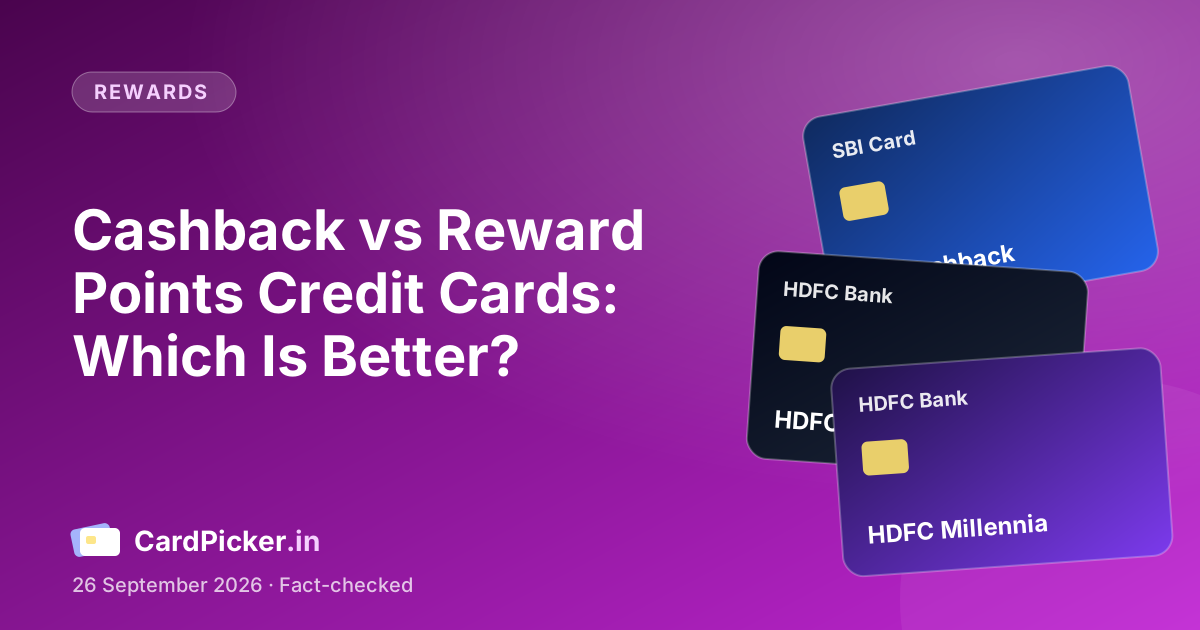
- Some cards blur the line. HDFC Millennia pays "cashback" as points worth ₹1 each.
Every rewards card pays you back in one of two currencies: rupees (cashback) or points (reward points, miles or coins). Which is better depends less on the card and more on you.
The key difference
- Cashback: a fixed rupee amount credited to your statement or wallet. ₹100 back is ₹100.
- Reward points: a currency whose rupee value depends on how you redeem it. The same point can be worth ₹0.25 or ₹1 or more. Our points value guide explains how to work it out.
Side by side
| Cashback cards | Reward points cards | |
|---|---|---|
| Value | Fixed and guaranteed | Varies by redemption |
| Effort | Automatic or one click | Needs planning to get top value |
| Top-end potential | Usually capped (for example ₹2,000 a month on SBI Cashback's 5% tier) | High on premium cards (about 3.3% on HDFC Infinia regular spends) |
| Expiry risk | Low, since it's usually auto-credited | Points can expire (HDFC Millennia: within 2 years) |
| Devaluation risk | Rate cuts happen | Rate cuts plus redemption and transfer-partner cuts |
| Best for | Most everyday spenders | Frequent travellers and high spenders |
A worked comparison
For a ₹50,000-a-month spender with a balanced mix, here's the estimated yearly value after fees:
- SBI Card Cashback (cashback): about ₹17,640
- HDFC Bank Regalia Gold (points at ₹0.50 each): about ₹12,050
At this spending level the cashback card wins clearly. Even valuing every Regalia Gold point at its best common rate (₹0.50 on flights and hotels), the points card earns less. The gap narrows for high spenders, and premium points cards like HDFC Bank Infinia Metal pull ahead at ₹1 lakh+ a month, especially with lounge access you'd actually use.
Choose cashback if…
- You want simplicity and guaranteed value.
- You spend under about ₹50,000 a month.
- You don't travel much or don't want to plan redemptions.
Choose points if…
- You fly or stay in hotels several times a year and enjoy planning.
- You spend enough to earn meaningful balances (roughly ₹1 lakh+ a month on premium cards).
- You'll use perks like lounge access that come with points cards.
The hybrid approach
Many people use both: a cashback card for everyday categories and a points card for travel and big purchases. Our worked example shows how a small wallet of cards earns far more than any single card. See the best options in our best cashback cards and best travel cards lists.
Hidden differences that matter
How the reward is credited
Some "cashback" cards credit cash automatically to your statement. SBI Cashback, for example, auto-credits cashback. Others pay cashback as points you must redeem. HDFC Millennia's cashback arrives as points worth ₹1 each, with a 500-point minimum redemption and 2-year expiry. Auto-credit is simplest. Redeemable cashback needs a little attention.
What counts as a purchase
Both types exclude similar categories: fuel, rent, wallet loads, EMIs and often government payments. But points cards sometimes also cap rewards on utilities and insurance. Read the exclusions list before comparing rates.
What happens when you cancel
Unredeemed points are usually lost when you close a card. Credited cashback is already yours. Redeem points before closing or downgrading.
A simple decision rule
- Estimate your yearly spending on the card.
- Multiply by the cashback card's rate after caps. That's guaranteed value.
- Multiply by the points card's rate at the redemption value you'd actually use.
- Subtract each card's fee (with GST) unless you'll reach its waiver.
- Only pick the points card if it wins by enough to justify the effort, at least 20–30%.
Our credit card finder runs exactly this comparison for all cards at once, using your spending.
Which cards are which?
Cashback cards we track: SBI Card Cashback, Amazon Pay ICICI Bank, Flipkart Axis Bank, Axis Bank ACE, HSBC Live+, Swiggy BLCK HDFC Bank, Airtel Axis Bank.
Reward points and miles cards: HDFC Bank Regalia Gold, HDFC Bank Infinia Metal, HDFC Bank Diners Club Black Metal, Axis Bank Atlas, SBI Card SimplyCLICK, IDFC FIRST Wealth, Scapia Federal Bank.
Scapia is a special case. Its coins can only be used for travel booked in the Scapia app, so treat them as travel credit rather than cash.
FAQs
Is cashback taxable in India?
Cashback on your own purchases is generally treated as a discount on the price rather than income. For large or unusual amounts, check with a tax adviser.
Which is better for beginners: cashback or points?
Cashback. It's simpler, the value is guaranteed, and there's no risk of points expiring unused.
Do reward points expire?
Often, yes. Expiry depends on the programme: HDFC says Millennia points lapse within 2 years, while IDFC FIRST markets its points as never expiring. Track yours with our points expiry tracker.
Can I convert reward points into cash?
Many banks let you redeem points as statement credit, which works like cash but is often at a lower value than travel redemptions. Check the rupee value per point before you redeem.
Which is better for online shopping?
Usually a cashback card: 5% on Amazon, Flipkart or broad online spending is simple and hard to beat with points.
Is a cashback card good for travel?
For domestic spending, yes. For international spending, forex markup matters more. A zero-forex card can save 3.5–4.1% per transaction, which is more than most cards earn.
Sources
- HDFC Bank: Millennia Credit Card FAQ (Feb 2026)
- Live From A Lounge: SBI Cashback changes from April 2026