Key takeaways
- For a household spending ₹60,000 a month, one basic 1% card earns about ₹7,200 a year.
- A four-card wallet, with each card used where it pays most, earns about ₹38,201 a year after fees. That's about ₹31,001 more.
- Even compared with the single best card for this household (about ₹23,520), the wallet adds about ₹14,681.
- Caps are the catch: each card's bonus rate stops at its monthly limit.
Most people put everything on one card. That's simple, but it leaves real money on the table, because almost every card pays a high rate in a few categories and 1% or less elsewhere. Here's a worked example with real cards and the site's own calculator.
The household
A family spending ₹60,000 a month on cards:
| Category | Monthly spend |
|---|---|
| Amazon | ₹8,000 |
| Flipkart | ₹4,000 |
| Other online | ₹6,000 |
| Swiggy/food delivery | ₹6,000 |
| Dining | ₹4,000 |
| Groceries | ₹10,000 |
| Travel | ₹5,000 |
| Fuel | ₹5,000 |
| Bills | ₹5,000 |
| Everything else | ₹7,000 |
Option 1: one basic card
A card paying a flat 1% returns about ₹7,200 a year on ₹7,20,000 of spending.
Option 2: the best single card
The best single card in our database for this exact profile earns about ₹23,520 a year after fees. Better, but still capped. Its high-rate categories hit their monthly limits.
Option 3: the right card for each purchase
| Card | Use it for | Monthly spend | Yearly value after fee |
|---|---|---|---|
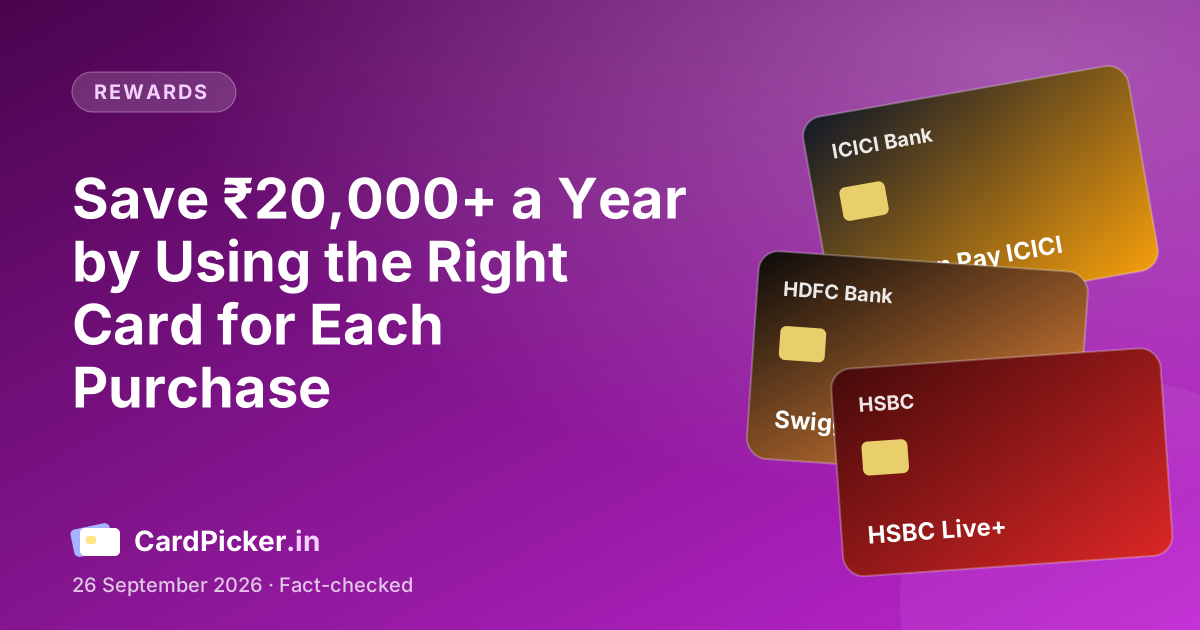
| Amazon Pay ICICI | Amazon, everything else | ₹15,000 | ₹5,640 |
| Swiggy BLCK HDFC | Swiggy/food delivery, Flipkart, other online, travel | ₹21,000 | ₹16,200 |
| HSBC Live+ | dining, groceries, bills | ₹19,000 | ₹14,400 |
| BPCL SBI | fuel | ₹5,000 | ₹1,961 after ₹589 fee |
| Total | ₹38,201 | ||
Each card is valued only on the spending assigned to it, so monthly caps and fee waivers are applied realistically. For example, BPCL SBI Card doesn't reach its ₹1 lakh fee waiver on fuel alone, so its fee is subtracted.
Why this works
- Amazon Pay ICICI Bank pays 5% on Amazon for Prime members, with no cap and no fee.
- Swiggy BLCK HDFC Bank pays 10% on Swiggy and 5% on many online categories, each capped at ₹1,500 a month.
- HSBC Live+ pays 10% on dining, groceries and utilities, up to ₹1,200 a month.
- A fuel card turns a category most cards ignore into about 4% back at partner pumps.
The rules that make it work
- Pay every card in full. One month of interest at about 3.5–3.75% wipes out a year of gains.
- Track caps. When a card hits its cap, switch that category to your next-best card.
- Mind fee waivers. Splitting spend can drop a card below its waiver threshold, as the fuel card shows.
- Keep it to 3–4 cards. More cards means more bills to track and more chances of a missed payment.
Do it with your own numbers
Tick the cards you already have in our wallet optimiser to see which one to use for each purchase and the best card to add next. Or rank every card for your spending with the credit card finder.
How to build your own wallet in 15 minutes
- Pull three months of statements and total your spending by category: Amazon, Flipkart, food delivery, dining, groceries, fuel, bills, travel and everything else.
- Find your top two or three categories. These are where specialist cards pay off.
- Pick one "everywhere" card with a decent flat rate for all other spending.
- Add specialist cards only if they beat the everywhere card by 2% or more on at least ₹5,000 a month. Otherwise the extra card isn't worth tracking.
- Check fees and waivers for each card on the spending you'll actually give it.
Common mistakes
- Ignoring caps. A 10% card capped at ₹1,200 a month stops helping after ₹12,000 of spending in that category.
- Too many cards. Four annual fees and four due dates is where things go wrong. Set up auto-pay for the full amount on every card.
- Forgetting exclusions. Rent, wallet loads, fuel and government payments earn nothing on many cards and may attract fees.
- Chasing rewards with EMIs. Most cards don't reward EMI transactions, and "no-cost" EMI still costs GST.
A simpler two-card version
If four cards is too many, a two-card wallet captures most of the gain: one card for your biggest online platform (such as Amazon Pay ICICI Bank for Amazon) and one high-rate everyday card (such as HSBC Live+ for dining, groceries and bills). Test combinations in the wallet optimiser.
FAQs
Is it worth having multiple credit cards?
Yes, if you pay every card in full and on time. Two to four well-chosen cards usually earn far more than one card, without hurting your credit score.
How do I remember which card to use?
Keep it simple: one card for your main shopping site, one for food, one for everything else. Our wallet optimiser shows the best card for each category.
Do multiple cards hurt my CIBIL score?
Not by themselves. Late payments and high utilization hurt your score. More total credit limit can actually lower your utilization ratio.
What if I can only get one credit card?
Pick the card that pays most on your largest spending category and has no cap problems at your spending level. Our quiz and finder rank cards for your profile.
Does the wallet approach work on a low salary?
Yes, on a smaller scale. Even two lifetime free cards, one for your main online platform and one for everything else, beat a single basic card.
Sources
- HSBC India: Live+ credit card
- About Amazon India: Amazon Pay ICICI card offer
- Live From A Lounge: Swiggy BLCK and ORNGE
- SBI Card: BPCL SBI Card