Key takeaways
- Milestone benefits are bonus vouchers, points or miles unlocked once your yearly card spend crosses a threshold.
- The milestone "year" is often 12 months from your card's anniversary, not the calendar year.
- Some spending, like rent, fuel, wallet loads or EMI conversions, is often excluded from milestone spend.
- Track your progress so you don't miss a threshold by a small amount near year-end.
Some of the best value on a premium credit card doesn't come from everyday rewards; it comes from milestone benefits that trigger once you cross a yearly spending threshold. Miss the threshold by a small margin near the end of your card year, and you lose the whole bonus. Here's how to track it properly.
What are milestone benefits?
A milestone benefit is a bonus, on top of your regular rewards, once total spending on the card crosses a set amount in a defined period. Examples in our database:
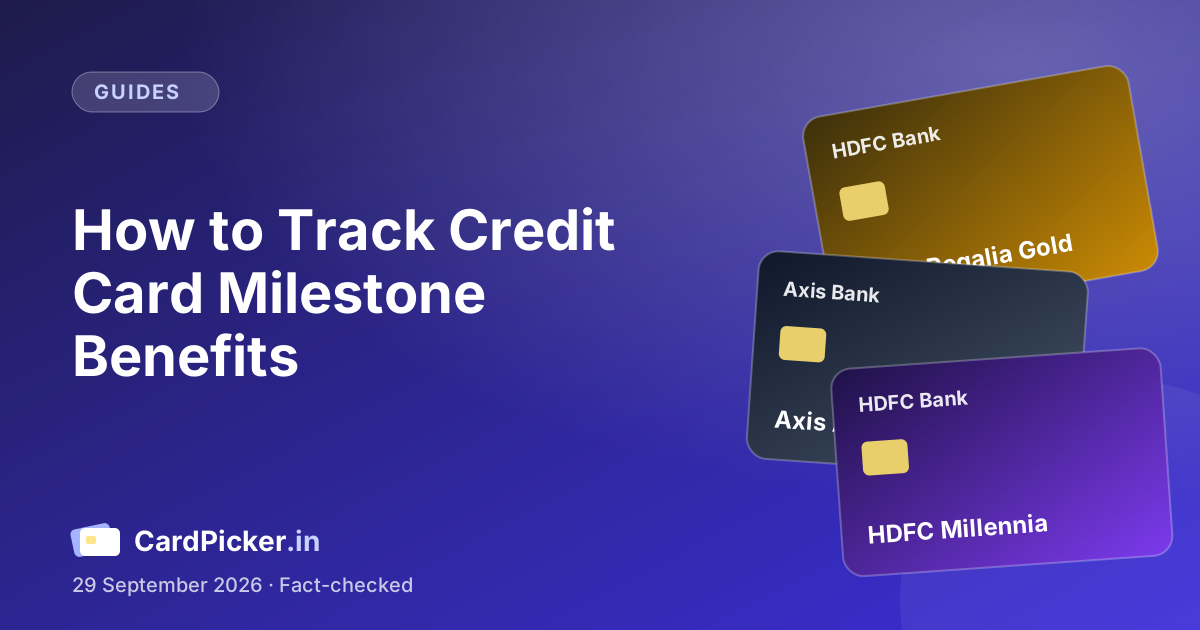
- HDFC Bank Regalia Gold: a ₹5,000 flight voucher at ₹5 lakh yearly spend, with another ₹5,000 voucher at ₹7.5 lakh.
- Axis Bank Atlas: 2,500 bonus EDGE Miles at ₹3 lakh, more at ₹7.5 lakh and ₹15 lakh.
- HDFC Bank Millennia: a ₹1,000 gift voucher each quarter you spend ₹1 lakh.
These can be worth thousands of rupees, often more than a year of the card's everyday rewards on moderate spending.
The "year" isn't always the calendar year
This trips up a lot of cardholders. Many banks count milestones over 12 months from when you got the card (your card's anniversary), not from 1 January. So if you got your card in April, your "milestone year" might run April to March. Check your card's terms and conditions or ask customer care for your exact milestone period and reset date.
What usually doesn't count
Card issuers commonly exclude some transaction types from milestone-qualifying spend, including:
- Rent payments
- Wallet loads and prepaid top-ups
- Fuel purchases (though rules vary)
- EMI conversions
- Cash advances and finance charges
- Government and tax payments on some cards
Always check your specific card's terms, since exclusions vary. If you're relying on a big one-off payment to cross a threshold, confirm that spend type is eligible first, rather than assuming.
How to track your progress
- Check your bank's app. Many banks show a milestone progress bar in the rewards or offers section.
- Add up your statements. If the app doesn't show it, total your monthly statements since your card anniversary.
- Use our milestone benefit tracker. Enter your card, year-to-date spend and months elapsed, and it projects whether you're on pace and shows exactly how much more you need.
Should you spend extra to hit a milestone?
Only if the milestone's value is genuinely worth more than the extra spending, and you'd otherwise not spend that money at all, or would spend it on something you actually need. Buying things you don't want just to cross a ₹5,000 voucher threshold usually isn't worth it. Compare the milestone value against the cost of extra spending with our fee break-even calculator.
Common mistakes
- Assuming the calendar year. Check your actual milestone period.
- Forgetting exclusions like rent or EMI conversions when totting up your spend.
- Missing the deadline by a small amount because nobody was tracking progress until the last month.
- Not checking if the milestone changed. Banks revise milestone thresholds and values; follow our changes log.
For the cards with the strongest milestones, see our best premium credit cards ranking, and compare overall value with the credit card finder.
What happens if you close the card before the milestone year ends?
Closing a card mid-year almost always forfeits any progress toward an unmet milestone; the bank doesn't prorate it. If you're partway to a valuable milestone and considering closing the card, weigh the milestone's value against the annual fee you'd save by closing early. See how to close a credit card before deciding.
Do add-on cards count toward the primary cardholder's milestone?
On most banks, yes: spending on add-on cards is pooled with the primary card's spend for milestone purposes, since it's all billed to the same account. Confirm this with your bank if you're relying on a family member's add-on spending to help reach a threshold, as a few issuers track add-on spend separately.
Set a reminder
The simplest way to never miss a milestone is a calendar reminder two months before your card's anniversary, to check your year-to-date spend and decide if you need to bring forward any planned purchases. Combine this with our reward points expiry tracker so both your milestones and your points stay on your radar.
Milestones vs everyday reward rate: which matters more?
For light spenders, the everyday reward rate on a card usually matters more, since a milestone may never be reached. For heavier spenders who reliably cross ₹5–15 lakh a year on one card, milestones can add up to a meaningful share of the card's total annual value, sometimes more than the everyday rewards. When comparing cards, look at both figures rather than just the headline reward percentage; our credit card finder already factors milestone value into its yearly estimate for each card.
FAQs
What is a credit card milestone benefit?
A bonus, such as vouchers, points or miles, given once your card spending crosses a set yearly threshold, on top of regular rewards.
Does the milestone year start on 1 January?
Often not. Many cards count 12 months from your card's anniversary date. Check your card's terms.
Does rent count toward a milestone threshold?
Usually not. Rent, wallet loads, fuel and EMI conversions are commonly excluded from milestone-qualifying spend on many cards.
How can I check my milestone progress?
Check your bank's app, add up your statements since your card anniversary, or use our milestone benefit tracker.