Key takeaways
- On a ₹1.5 lakh trip, a 3.5% forex card costs about ₹6,200 in markup and GST. A zero-forex card costs nothing.
- Enable international usage on your card before you travel. Indian cards are domestic-only by default.
- Always pay in the local currency, never in rupees.
- Carry two cards on different networks (Visa and Mastercard) plus some local cash.
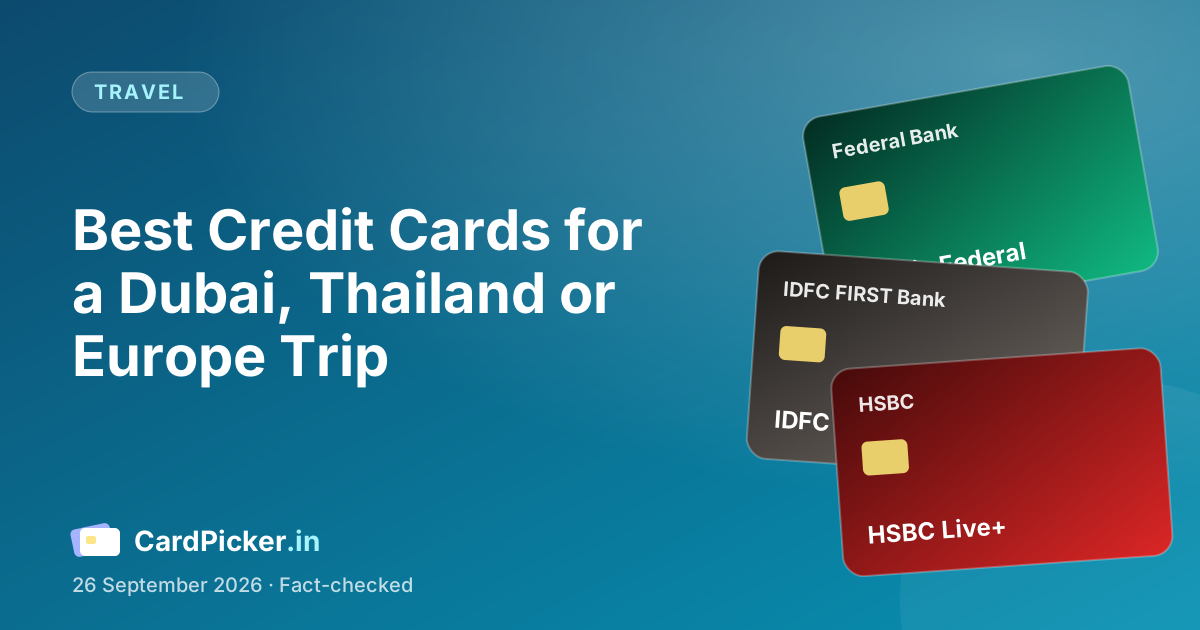
Dubai, Thailand and Europe are three of the most popular international trips for Indians. The card you carry can save or cost you thousands of rupees, mostly because of forex markup. Here's what to take and how to use it.
Forex cost on a ₹1.5 lakh trip, by card
| Card | Forex markup | Cost on ₹1.5 lakh (with GST) |
|---|---|---|
| Scapia Federal Bank | 0% | ₹0 |
| IDFC FIRST Millennia | 0% | ₹0 |
| HSBC Live+ | 1.99% | ₹3,522 |
| Amazon Pay ICICI Bank | 1.99% | ₹3,522 |
| HDFC Bank Regalia Gold | 2% | ₹3,540 |
| SBI Card Cashback | 3.5% | ₹6,195 |
Markups from our card database. IDFC FIRST cards became zero-forex on 9 September 2026. Most IDFC FIRST cards stop earning points on international spends from 26 October 2026.
Before any international trip
- Enable international usage. Under RBI rules, Indian cards are issued for domestic use by default. Switch on international transactions (and contactless, if you want it) in your bank app, and set sensible limits.
- Carry two cards on different networks, ideally a Visa and a Mastercard, in case one network isn't accepted or a card is blocked.
- Save your bank's international helpline in case your card is lost or blocked.
- Keep some local cash for taxis, street food and small shops.
Dubai (UAE dirham, AED)
- Card acceptance is excellent. Visa and Mastercard are accepted almost everywhere, including malls, restaurants and hotels. American Express and Diners Club work at larger establishments but less universally.
- Taxis: most accept cards, but some drivers prefer cash, so carry a little.
- Metro: Dubai's metro uses its own Nol card, which you top up at stations.
- Best pick: a zero-forex card like Scapia Federal Bank for everyday spending, with a second Visa or Mastercard as backup.
Thailand (Thai baht, THB)
- Cash matters more in Thailand than in Dubai or Europe, especially at street markets, small restaurants and for tuk-tuks.
- ATM fees are high: most Thai ATMs charge foreign cards about 220–350 baht per withdrawal, on top of your bank's charges. AEON ATMs are reported to charge less (about 150 baht). Withdraw larger amounts less often.
- Never withdraw with a credit card. That adds a cash advance fee and interest from day one. See our cash withdrawal guide.
- Best pick: a zero-forex credit card for hotels and restaurants, plus a forex card or zero-markup debit card for cash.
Europe (euro and other currencies)
- Contactless is everywhere in most Western European countries, and some places are card-only.
- DCC is common. Card machines and ATMs often offer to charge you in rupees. The rate is typically 5–8% worse. Always choose euros (or the local currency).
- Non-euro countries (such as the UK, Switzerland and Czechia) use their own currencies. Zero-forex cards handle these at no extra cost.
- Best pick: a zero-forex card, ideally one that also earns rewards on international spending. Remember that most IDFC FIRST cards stop earning points on international transactions from 26 October 2026.
Credit card, forex card or debit card?
For most travellers, the best setup is a zero-forex credit card for purchases plus a forex card or zero-markup debit card for cash. We compare all three in detail in forex card vs credit card vs debit card.
After the trip
- Check your statement for DCC charges or unexpected ATM fees, and dispute errors quickly.
- Turn international usage off again if you don't need it.
- Pay the full bill. Travel months are when balances get carried over.
How much cash to carry
There's no single right number, but a practical approach is to carry enough local cash for your first day (airport transport, a meal, small purchases) and use cards for everything else. In card-friendly places like Dubai and most of Western Europe, many travellers need very little cash. In Thailand, plan for more cash for markets, street food and local transport, and withdraw it in fewer, larger amounts to limit ATM fees. Keep cash and cards in separate places in case of theft.
Dealing with a blocked or lost card abroad
- Block it immediately in your bank app or by calling the international helpline.
- Report fraud within 3 days to protect your RBI zero-liability rights. See our fraud guide.
- Switch to your backup card on the other network.
FAQs
Which Indian credit card has zero forex markup?
Among cards we track, Scapia Federal Bank and (since 9 September 2026) all IDFC FIRST Bank credit cards charge zero forex markup.
Should I pay in rupees or local currency abroad?
Always the local currency. Choosing rupees triggers dynamic currency conversion, which usually uses a worse rate.
Are Indian credit cards accepted in Dubai?
Yes. Visa and Mastercard are accepted almost everywhere in Dubai. Amex and Diners are accepted at larger establishments.
How do I enable my card for international use?
Use your bank's app or net banking to turn on international transactions and set limits. RBI requires cards to be issued for domestic use by default.
Do I need a forex card for Thailand?
Not necessarily, but it helps for cash. Thai ATMs charge foreign cards a high per-withdrawal fee, so withdraw less often, using a forex card or zero-markup debit card, never a credit card.
Sources
- Business Standard: IDFC FIRST zero forex markup
- Gates Dubai: credit card acceptance in Dubai
- Thailand ATM fees 2026
- TripCabinet: dynamic currency conversion trap