Key takeaways
- Most students don't have income, so the usual options are a parent's add-on card, an FD-backed card or a forex card.
- Forex markup matters most: 3.5% on a typical card vs 0% on zero-forex cards like Scapia and, since September 2026, IDFC FIRST cards.
- Pay large university fees by bank transfer (under LRS), not by card, to avoid forex markup.
- Once abroad, a local student credit card helps build credit history in that country.
Moving abroad to study means paying for rent, groceries, travel and emergencies in a foreign currency, often before you have a local bank account. The card you take from India can save or cost you thousands of rupees a month in forex charges. Here are the realistic options and how to choose.
Your options as a student
| Option | Who it suits | Pros | Cons |
|---|---|---|---|
| Add-on card on a parent's card | Most students | No income proof needed; parent controls limit | Parent pays the bill; forex markup of the main card applies |
| Zero-forex credit card | Students with income or a parent as primary | No forex markup | Needs eligibility |
| FD-backed (secured) card | Students without income | Easy approval against a fixed deposit | Limit tied to FD; forex markup varies |
| Forex card | Budget control | Locked exchange rate; no credit risk | Load and reload fees; not a credit card |
Why forex markup matters so much
Say you spend the equivalent of ₹60,000 a month abroad on your card. At a 3.5% forex markup plus 18% GST on it, that's about ₹2,478 a month in charges, or nearly ₹30,000 a year. A zero-forex card saves all of that. Try the numbers in our forex markup calculator.
Zero-forex cards worth considering
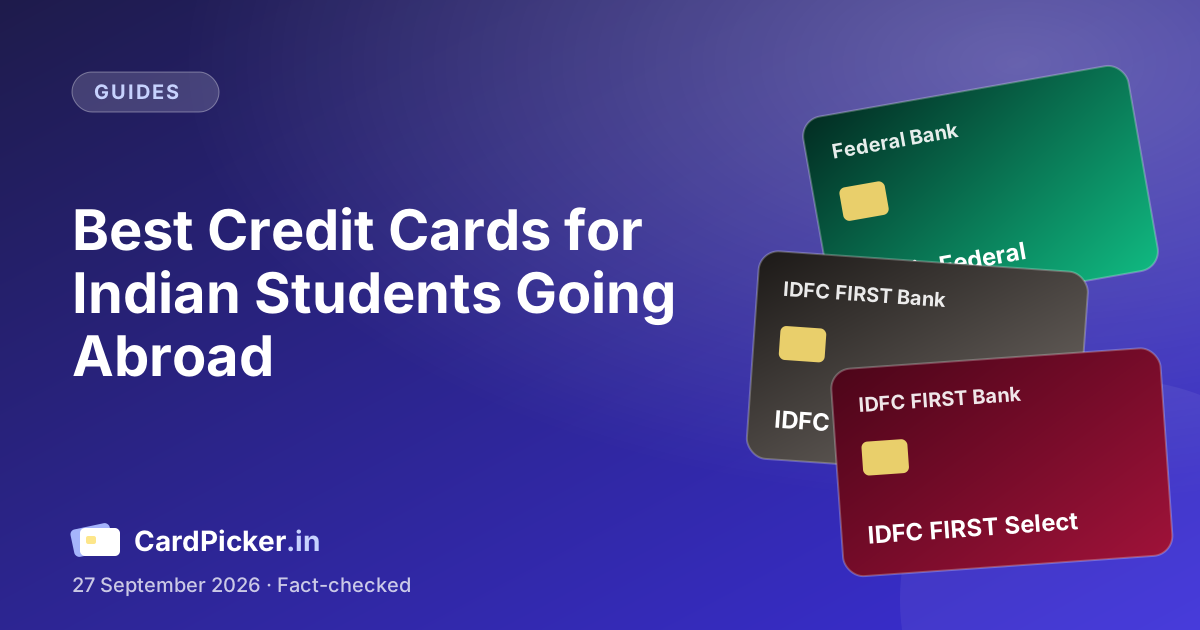
Scapia Federal Bank
Lifetime free · No fee to waive · Forex 0%
- Zero forex markup on international spends
- 10% back in Scapia Coins on all eligible spends
- 20% back on travel booked through the Scapia app
Watch out: Rewards redeemable only for travel on Scapia
IDFC FIRST Select
Lifetime free · No fee to waive · Forex 0%
- Lifetime free
- Zero forex markup (from September 2026)
- 10X points on spends above ₹20,000 a month
Watch out: High reported income requirement (₹12 lakh a year)
Since September 2026, every IDFC FIRST credit card has zero forex markup. Scapia Federal Bank is lifetime free with zero forex. A parent can hold one of these and give the student an add-on card. See our best travel cards for more.
Add-on cards for students
Most Indian banks let the primary cardholder add a card for a child aged 18 or over. The add-on shares the main card's limit, and the parent can often set a lower sub-limit. The main card's forex markup and benefits apply, so pick a zero-forex primary card if possible. See are add-on cards worth it.
Paying university fees
Don't pay tuition by an Indian credit card unless the university charges no fee and your card has zero forex. The usual route is a bank transfer (wire) under RBI's Liberalised Remittance Scheme (LRS), through your bank or a licensed remittance provider. Education remittances funded by an education loan get favourable tax collected at source (TCS) treatment, and self-funded education remittances above a threshold attract TCS, which you can claim back when filing your tax return. Ask your bank for current rates and thresholds before sending money.
A practical setup
- A zero-forex add-on card for everyday spending and emergencies.
- A forex card or international debit card as backup, especially in countries where some merchants don't take cards from India.
- A local bank account once you arrive, for rent and part-time wages.
- A local student credit card after a few months, to build credit history in that country, which you'll need for renting and phone contracts.
Budgeting for your first months
Your first months abroad often have big one-time costs: deposits for rent, furniture, a phone contract, winter clothes and transport passes. Plan these with your parents in advance, and set a clear monthly limit on the add-on card so neither side is surprised by the bill. Keep one emergency option, such as a card with a separate limit, for medical or travel emergencies.
Safety tips
- Enable international usage only for the countries you'll be in, and set transaction limits in the app.
- Always choose to pay in the local currency, not rupees, when a card machine offers "dynamic currency conversion". The conversion rate is usually worse.
- Save your bank's international helpline number, and know how to block the card in the app.
- Read why cards get declined before you fly, especially international transactions.
For the full comparison, see forex card vs credit card vs debit card abroad and credit cards for students in India.
FAQs
Can an Indian student get a credit card to use abroad?
Usually through a parent's add-on card or an FD-backed card, since most students have no income. A forex card is another option.
Which card has no forex charges?
Scapia Federal Bank, and since September 2026 all IDFC FIRST credit cards, have zero forex markup.
Should I pay university fees by credit card?
Usually not. A bank transfer under LRS avoids forex markup. Paying by card only makes sense with zero forex and no university surcharge.
Should I get a local credit card abroad?
Yes, after a few months. It builds local credit history, which you will need for rentals and contracts.